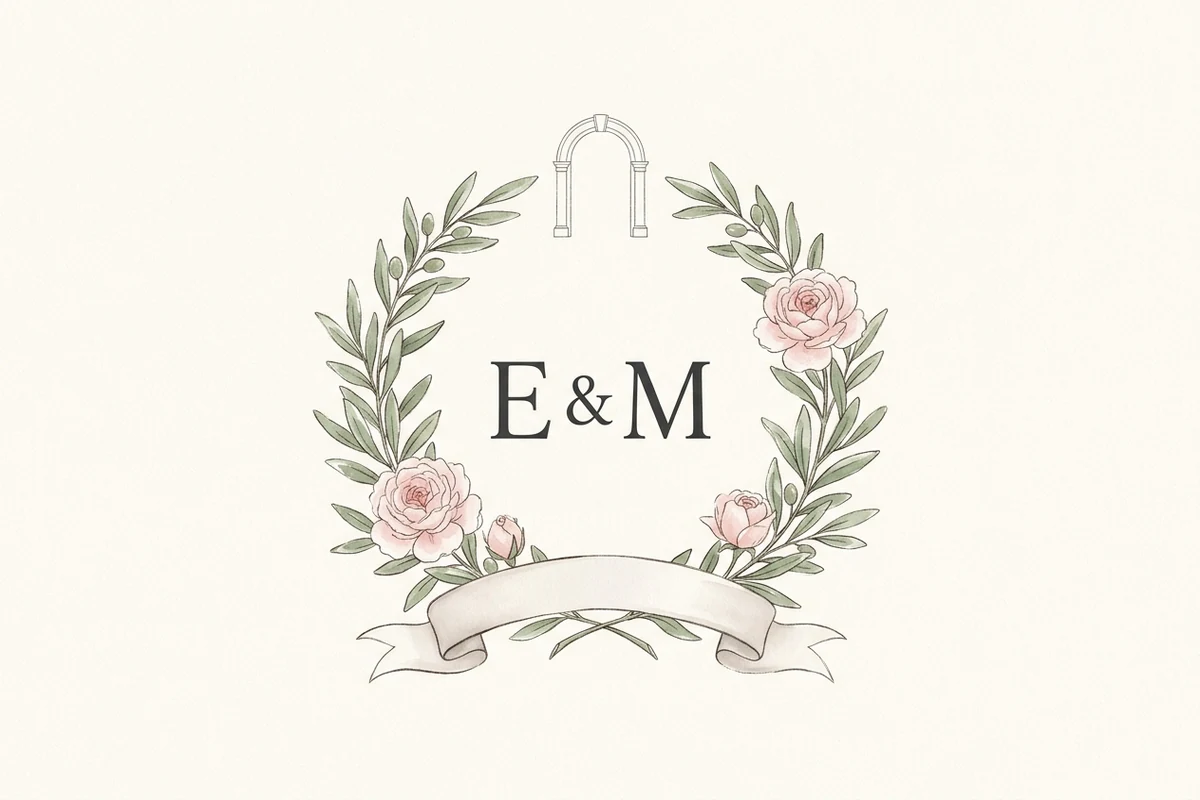
A wedding crest is a custom illustrated emblem designed to represent a couple and unify the visual look of their wedding day. Rather than claiming an inherited family coat of arms, a modern wedding crest combines couple initials with meaningful artwork—such as bouquet flowers, a ceremony venue motif, and wedding colors—so save-the-dates, invitations, menus, welcome signs, and favors feel like one cohesive collection.
What a wedding crest means in modern wedding design
In modern stationery and event design, a wedding crest acts as the signature visual mark for a couple’s celebration. It introduces the mood of the weekend on the very first piece guests open—usually a save-the-date or invitation card—and reappears on menus, ceremony programs, cocktail napkins, welcome signs, and thank-you notes.
Unlike a historical coat of arms, a wedding crest carries no legal or genealogical claim. It does not prove noble ancestry or require permission from a heraldic authority. Its purpose is celebratory and personal: marking the start of a shared household with symbols that both partners recognize.
How wedding crests grew out of heraldry
The visual language of a wedding crest borrows from medieval European heraldry, where shields, seals, and embroidered banners identified families, towns, and guilds. Historically, heraldic arms followed strict rules and were granted to specific individuals and their documented descendants.
Modern couples and stationers adapted that timeless structure—balanced symmetry, framing wreaths, ribbon banners, and wax seals—while leaving behind rigid ancestral rules. Today, any couple can commission or generate a decorative wedding crest built around their own story rather than a centuries-old surname record.
Six common parts of a wedding crest
Most wedding crests combine a few structured pieces so the illustration reads clearly at both invitation size and poster scale. You do not need every element below; choosing three or four keeps the design uncluttered.
- Frame or border: A botanical wreath, oval laurel, baroque cartouche, traditional shield, or clean modern arch that holds the artwork together.
- Initials: Two first-name initials (a duogram), a single shared last-name initial, or a classic three-letter arrangement centered inside the frame.
- Florals and botanicals: Illustrations echoing your bouquet or season—such as garden roses, olive branches, eucalyptus, hydrangeas, or wildflowers.
- Venue or place details: A subtle sketch of a ceremony arch, chapel roofline, coastal horizon, or mountain silhouette anchoring the event to where you are celebrating.
- Personal milestone symbols: Quiet storytelling touches such as a beloved pet, hometown botanical, musical instrument, or hobby motif.
- Optional ribbon or date: A clean scroll beneath the frame carrying the wedding date, location, or a short meaningful phrase.
Wedding crest vs. wedding monogram vs. family coat of arms
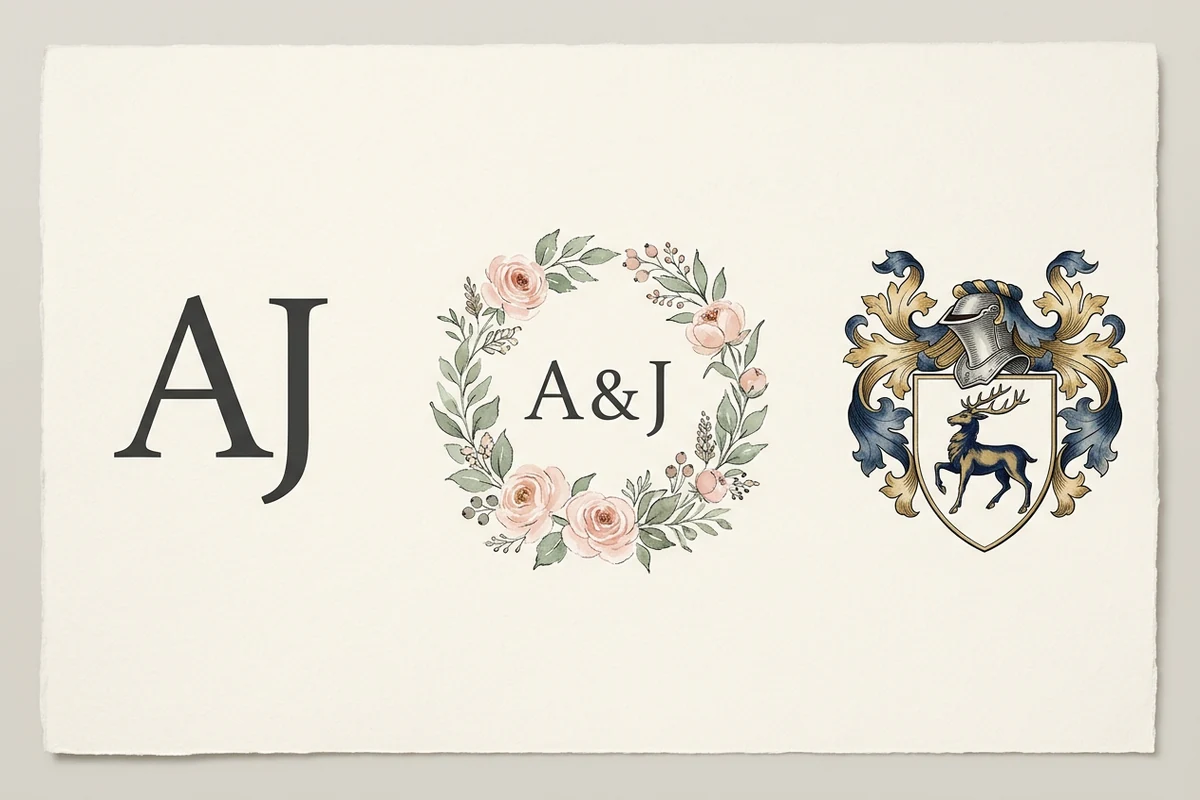
Couples often use wedding crest, wedding monogram, and coat of arms interchangeably, but each serves a different visual role. Knowing the distinction helps you ask a designer—or an AI generator—for the exact kind of artwork your stationery needs.
A wedding monogram is strictly typographic: two or three intertwined letters with minimal or no surrounding illustration. Because it is simple and compact, a monogram works effortlessly on very small surfaces like wax seals, cufflinks, and embossed envelope flaps.
A wedding crest builds an illustrated story around those initials using botanicals, framing artwork, and personal symbols. It shines on larger focal pieces such as main invitation cards, envelope liners, ceremony programs, menus, and welcome signs. A family coat of arms, by contrast, is a formal heraldic achievement centered on a shield (and sometimes a helmet, crest above the helm, and supporters) governed by historical heraldic tradition.
When a wedding crest is worth creating
A wedding crest is most useful when you want multiple wedding touchpoints to look intentionally connected without repeating the exact same text layout everywhere. Even a single illustrated wreath can tie together printed invitations, a wedding website header, favor tags, and reception menus.
If you plan to stamp a 1-inch wax seal or embroider tiny cocktail napkins, pair your full-color wedding crest with a simplified single-color or initials-only version. Fine watercolor washes and delicate leaves print beautifully on cotton cardstock, while smaller physical imprints need broader lines and wider negative space.
Questions & answers
What is the purpose of a wedding crest?
A wedding crest gives your celebration a cohesive visual centerpiece. Couples place it on invitations, envelope liners, ceremony programs, menus, welcome signs, and keepsakes so every piece feels connected to the same story and palette.
Do we need a historical family crest to have a wedding crest?
No. A modern wedding crest is original decorative artwork created for your wedding day, not a claim to inherited heraldry. You can build one from your initials, bouquet flowers, venue, and personal story regardless of family history.
Should we choose a wedding crest or a wedding monogram?
Choose a wedding monogram if you prefer clean, typography-only lettering that fits tiny spaces easily. Choose a wedding crest if you want illustrated flowers, frames, and personal symbols that tell a visual story—or use both together across large and small stationery pieces.
When should we design a wedding crest in our planning timeline?
Most couples finalize their wedding crest before ordering save-the-dates or formal invitations—typically six to nine months before the ceremony—once the venue, season, and core wedding colors are settled.
Continue learning
- How to make a wedding crest step by step
- Explore wedding crest ideas and visual styles
- How to make a wedding crest on Canva
- Coat of arms vs. family crest: heraldic differences
Try the Wedding Crest Generator — Turn your initials, flowers, and wedding colors into an original wedding crest preview.
Sources & further reading
- American Heraldry Society: Guidelines for Heraldic Practice
- College of Arms: Frequently Asked Questions on historical arms
The examples and illustrations in this guide are original educational designs. They do not document grants of arms or establish anyone’s ancestry.